
A new cedar shake or shingle roof on a typical 2,000 sq ft Seattle-area home costs $21,500–$36,000 at 2026 prices, or about $10–$18 per square foot installed. In the Pacific Northwest it lasts 18–25 years, and longer when the cedar is pressure treated and 100% edge grain. Yearly inspection, moss control and good ventilation protect that lifespan.
Cedar is the traditional Pacific Northwest roof, common on older Seattle homes and wooded Eastside lots. It looks like nothing else, and it needs more care than other roofs. This guide covers cost, why cedar wears faster here, how it compares with composition and metal, and what to ask a contractor.
How much does a cedar roof cost in Seattle?
For a typical 2,000 sq ft roof at a 4/12 pitch, plan on $21,500–$36,000 at 2026 prices, roughly $10–$18 per square foot installed. These are planning ranges, not a quote. Our suppliers raised prices four times during 2026, so treat any cedar figure as perishable.
What moves the price:
- Size and shape. Valleys, dormers, skylights and the number of roof facets all add labor.
- Pitch. A very steep pitch adds roughly 40% to labor compared with a walkable roof.
- Product and grade. Shakes and shingles are priced differently, and premium grades cost more (see below).
- Treatment. Fire-retardant or preservative-treated cedar costs more than untreated material.
- What’s underneath. Rotten sheathing found during tear-off has to be replaced. A roof that needs all new plywood decking can add about 20%.
- Permits and disposal. Our calculator allows $1,500–$2,500 for permits, dumpster and disposal. Whether a permit is needed at all depends on your city and the scope of work; see our permit directory.
For a first number on your own roof, use our roof cost calculator, which also shows the full Seattle-area cost table. A firm price takes an on-site inspection, and ours are free.
How long does a cedar roof last in the Pacific Northwest?
In the Pacific Northwest a cedar roof typically lasts 18–25 years. It lasts longer when the cedar is pressure treated and 100% edge grain.
That is shorter than many national guides suggest, and the reason is our climate. Western red cedar resists rot naturally, but a roof that stays damp for months breaks down faster than one that dries between storms. Around Seattle the causes are:
- Long wet seasons with few dry spells from October to spring.
- Shade. Tall trees keep roofs cool and damp, and north-facing slopes usually wear out first.
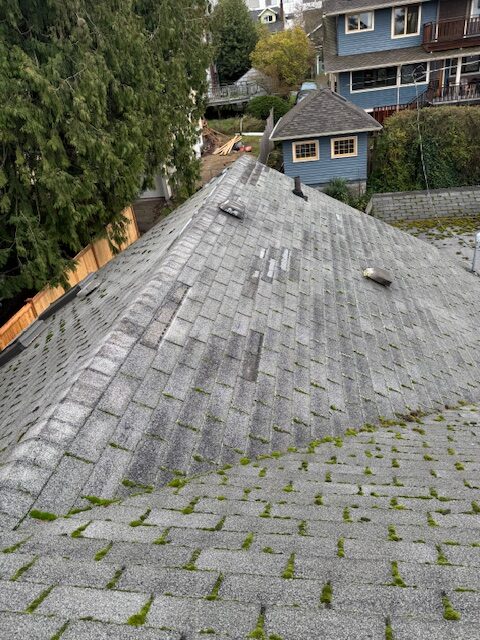
- Moss and debris. Needles and leaves collect between shakes and in valleys, hold water against the wood and feed moss.
Signs a cedar roof is near the end: split, cupped or curling shakes; pieces worn thin or missing; soft spots; thick moss; stains or daylight in the attic. Age alone doesn’t decide it. If your roof has a few more years in it with repairs and treatment, we’ll tell you so.
What’s the difference between cedar shakes and cedar shingles?
Both are cut from western red cedar, but they look and perform differently:
- Cedar shingles are sawn on both sides. They are thinner and smoother and give a neat, uniform look.
- Hand-split and resawn shakes have a split face and a sawn back. They are thicker, with a rough texture and deep shadow lines. This is the classic Northwest shake roof.
- Tapersawn shakes are sawn on both sides like a shingle but cut thicker, so they look tailored but heavier.
Grain and grade matter as much as style:
- Grain. In edge grain (vertical grain) cedar the growth rings run across the thickness of the piece, so it stays flatter and resists cupping and splitting better than flat grain. That is why 100% edge grain is part of the lifespan figure above.
- Grade. Cedar is graded on how much of each piece is clear heartwood and edge grain. The Cedar Shake & Shingle Bureau’s Certi-Label mark appears on graded bundles. Ask which grade a quote includes.
We install hand-split and resawn Western red cedar shakes and shingles, including Waldun Premium shakes (Number 1 Blue Label grade) and Certi-Label certified cedar, with 30- and 40-year warranty options.
Pressure treatment and fire treatment are different things. Pressure treatment with a preservative is what extends cedar’s life. Fire-retardant treatment is what earns a fire rating. A bundle can have one, both or neither, so ask which one a quote includes.
What maintenance does a cedar roof need in a wet climate?
More than any other roof. Plan on:
- An inspection every year, ideally after the November storms, and a treatment every 3–5 years.
- Keeping it clear. Clear needles and leaves from the roof, valleys and gutters, and trim overhanging branches so the roof can dry.
- Treating moss, not blasting it. Apply a moss treatment, wait for the moss to die, then sweep it off. Don’t pressure wash; it strips the wood and drives water under the shakes. Zinc strips help slow regrowth.
- Replacing damaged pieces promptly. One split or missing shake lets water into the layers below.
- Ventilation. Cedar has to dry from underneath as well as on top. A well-ventilated attic and an installation that lets air reach the back of the wood go a long way toward the upper end of the 18–25 year range.
Jake Stout has worked on cedar for his whole career. Before founding Stout Roofing in 1983 he spent several years hand-nailing composition and cedar shake roofs, and he was an early advocate of environmentally safe preservative treatments for cedar roofs. You can read more about Jake’s background.
Is a cedar roof fire-safe?
Untreated cedar is combustible. Fire-treated shakes carry a Class B or Class C fire rating. We recommend fire-treated material for any home in a wildfire-prone area or where local code requires it. Requirements vary by jurisdiction and sometimes by HOA, so check before you choose a product. We handle the permit whenever a job needs one, and every job has to meet code.
Cedar vs. composition vs. metal: which is right for your home?
These are our published 2026 planning ranges for the greater Seattle area, for a typical 2,000 sq ft roof at a 4/12 pitch:
| Material | Installed cost per sq ft | Typical 2,000 sq ft roof | Lifespan in the Pacific Northwest |
|---|---|---|---|
| Cedar shake & shingle | $10–$18 | $21,500–$36,000 | 18–25 years (longer if pressure treated and 100% edge grain) |
| Composition / asphalt shingle | $5–$8 | $10,500–$16,000 | 18–35 years |
| Metal | $12–$18 | $22,000–$36,000 | 40–50 years |
Source: Stout Roofing’s Seattle-area roof cost table, 2026 prices.
- Composition is the most common roof in the Seattle area and costs the least. It needs less upkeep than cedar, and its lifespan range overlaps cedar’s.
- Cedar is for homeowners who want its look and will maintain it. Some neighborhoods require it: the HOA in Woodinville’s Tuscany neighborhood, originally all cedar shake, requires shakes or CertainTeed Presidential TL in limited colors. Check your HOA before getting estimates.
- Metal costs the most up front and lasts the longest, about twice as long as cedar here.
Switching from cedar to composition costs more than a like-for-like re-roof. Many cedar roofs were installed over spaced boards rather than solid decking, so converting to composition needs all new plywood, which can add about 20%. Structural work like this usually needs a permit, and many cities inspect the nailing pattern. If you like the cedar look but not the upkeep, ask about shake-style composition shingles such as CertainTeed Presidential.
How do you choose a cedar shake roofing contractor in Seattle?
Cedar is less forgiving of shortcuts than composition. Before you sign, ask:
- Are you registered with Washington L&I, bonded and insured? You can check registration on L&I’s website.
- Which product and grade are you quoting? Is it 100% edge grain, and is it preservative treated, fire treated or both?
- How will you handle ventilation and underlayment so the cedar can dry?
- What fasteners do you use? Stainless steel is widely recommended, especially with treated cedar.
- What’s included? Tear-off, decking repair, permits and disposal should be itemized in writing.
- Who pulls the permit? A contractor who won’t pull one is a red flag.
Where Stout Roofing fits. We install cedar shake and shingle roofing across the greater Seattle area from our office in Woodinville. Cedar is in the company’s history. Jake learned the trade hand-nailing shakes, Stout began manufacturing its own cedar shakes in 1995, and Jake owned two cedar shake mills, in Snohomish and in Nanaimo, BC. Both eventually closed when old-growth salvage cedar ran out.
We hold Washington contractor license STOUTRL894D1, are bonded and insured, and are BBB A+ rated. Stout Roofing is also a CertainTeed ShingleMaster™ PRO credentialed roofing company, a credential that covers CertainTeed’s shingle systems. We have completed more than 15,000 roofing projects since 1983, and our most recent 1,811 documented roof replacements, across all materials, are mapped by city across 62 cities.
Thinking about cedar, or deciding whether to keep it? Request a free estimate and we’ll give you an honest read on what your roof needs.
Frequently asked questions
How much does a cedar roof cost in Seattle?
A cedar shake or shingle roof on a typical 2,000 sq ft Seattle-area home costs $21,500–$36,000 at 2026 prices, about $10–$18 per square foot installed. Pitch, cedar grade, fire treatment and any decking replacement move the price.
How long does a cedar roof last in the Pacific Northwest?
Typically 18–25 years. It lasts longer when the cedar is pressure treated and 100% edge grain, and when the roof is kept clear of moss and debris and is well ventilated.
Is cedar or composition better for a Seattle home?
Composition costs less ($10,500–$16,000 for a typical 2,000 sq ft roof), lasts 18–35 years here and needs less upkeep. Cedar costs $21,500–$36,000 and lasts 18–25 years, but gives a look composition can’t match and is required in some neighborhoods.
What is the difference between cedar shakes and cedar shingles?
Shingles are sawn on both sides and are thinner and smoother. Hand-split and resawn shakes have a split face and a sawn back, so they are thicker and more textured. Tapersawn shakes are sawn on both sides but cut thicker than shingles.
How often does a cedar roof need maintenance?
Have it inspected every year and treated every 3–5 years. Keep needles, leaves and moss off it, and don’t pressure wash it.
Are cedar roofs fire-resistant?
Fire-treated cedar shakes carry a Class B or Class C fire rating. Untreated cedar is combustible, so fire-treated material is recommended in wildfire-prone areas and wherever local code requires it.